
Have you ever wondered if a simple pickle could be a little health hero? These pickles get made naturally by soaking in a salty brine instead of using vinegar or heat. The process lets good bacteria (tiny helpers that keep your stomach happy) grow over time. Imagine biting into a snack that tastes great and gives your digestion a boost, too. In this post, I'll share how these fun, fermented treats can offer you a bit of extra support for your overall well-being.
Pickles as Probiotic Foods: How They Promote Gut Health
Have you ever tried a pickle that’s made naturally? These special pickles start off as cucumbers that soak in a salty brine made with clean water and kosher or sea salt. Instead of using vinegar or heat, they let nature do the work. The magic happens when the natural sugars in the cucumbers feed friendly bacteria, which then produce lactic acid (a natural way to preserve food) to give them that tangy kick.
During the fermentation, helpful compounds like flavonoids, phenols, and alkyl catechols form. These aren’t just fancy words, they actually help boost our natural defenses. Imagine food that not only tastes great but also gives your body a little extra support!
These probiotic pickles can really help with digestion, keep your gut happy, and even support your immune system. The live bacteria work to balance gut flora (the mix of good and not-so-good bacteria) so your body can absorb nutrients better. Plus, they keep key vitamins like K, C, and A and minerals such as calcium and potassium in the mix. Just keep in mind that because they’re salty, a little goes a long way.
Lacto-Fermentation Process in Probiotic Pickles

When you decide to ferment cucumbers at home, keep things simple. Use filtered or spring water and mix in 2 to 3 percent kosher or sea salt (measured by weight) to make your brine. Don’t use vinegar or chlorinated water so that the friendly lactic acid bacteria (the little helpers) can thrive. Keep your setup between 60 and 75°F and give it about 7 to 14 days to work its magic. You’ll notice bubbles popping up, which shows fermentation is in progress.
- Wash and trim your pickling cucumbers.
- Make a 2 to 3 percent salt brine.
- Tuck the cucumbers and any herbs you like into a jar.
- Pour in the brine, then press the cucumbers down so they’re all under the liquid.
- Let everything ferment at 60 to 75°F for 7 to 14 days, watching for bubbles.
- Once you love the taste, pop the jar in the fridge.
Key Stages of Lacto-Fermentation
In the very first few days (days 1 to 3), you'll see heterofermentative bacteria start the process by making a mix of different compounds. Then, from days 4 to 7, homofermentative bacteria take over and add a tang that helps preserve the cucumbers. Finally, between days 8 and 14, the pickles mature and develop that crisp, classic flavor we all love.
Nutritional Profile of Fermented Pickles and Digestive Support
Fermentation makes pickles a little powerhouse of goodness. As they ferment, natural antioxidants become easier for your body to use, which may help ease cell stress and keep swelling down. For example, there are compounds called alkyl catechols (friendly helpers) that seem to lower inflammation and might even defend against long-term issues like cancer or brain troubles. Just 2 or 3 spears give you a nice blend of vitamins K, C, and A along with important minerals, all while keeping salt in check.
The good bacteria in these pickles work like tiny helpers in your gut. They break down food and help your immune system chat clearly, creating a smooth path for nutrients to do their job. Think of your gut like a busy road where these microbes guide everything along nicely. Research hints they might also help balance inflammation, offering extra support for both your belly and overall well-being.
DIY Probiotic Pickles: Recipe, Equipment, and Safety
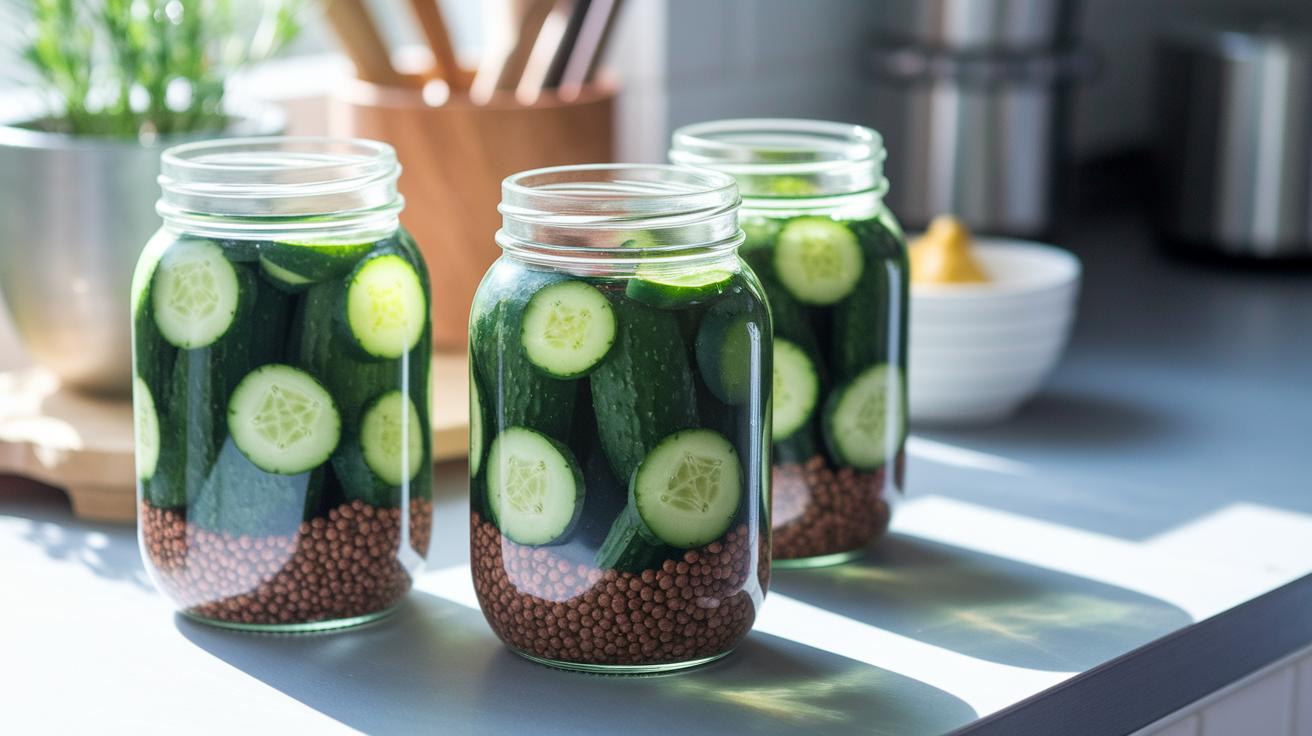
When you decide to whip up some probiotic pickles, start with fresh pickling cucumbers, filtered water, and Kosher salt. Use clean glass jars that have an airlock or a loose lid, and grab non-reactive tools like plastic or wood. Remember to sterilize your jars first. Keep those cucumbers completely underwater with a fermentation weight, and if you notice any mold floating on top, just discard it.
| Ingredient | Amount | Notes |
|---|---|---|
| Pickling cucumbers | 4 cups | Wash and trim ends |
| Filtered water | 1 quart | Chlorine-free |
| Kosher salt | 3 tbsp | Uniodized |
| Fresh dill/garlic | 2 sprigs/2 cloves | Optional prebiotic flavor |
| Fermentation weight | 1 | Keeps cucumbers submerged |
Keep an eye on the jars by checking for lots of tiny bubbles. These bubbles show that the good bacteria are busy at work. For instance, when you see them, it means your pickles are starting to develop that lively, tangy flavor. Try to maintain the jars at a cozy room temperature, roughly between 60 and 75°F, for about 7 to 14 days, and notice how the flavor and texture change over time.
Once your pickles have that perfect tangy taste, pop the jar into the refrigerator. The cool chill stops the fermentation and keeps them crisp while preserving the live cultures that bring along some extra health benefits.
Selecting Probiotic-Rich Store-Bought Pickles
When you're out shopping for probiotic pickles, start by reading the label closely. Look for words like "naturally fermented" or "raw, unpasteurized" because that tells you the pickles were made with live cultures instead of just vinegar or heat-treated methods seen in some big brands.
Next, check for jars kept in the fridge that show little bubbles. Those tiny bubbles mean the pickles still contain live cultures, which is great for keeping your gut happy. Keeping them chilled helps preserve these active cultures and keeps the pickles tasting fresh.
You might want to try brands like Bubbies Kosher Dill, Barrel Creek Provisions, Real Pickles, or Oregon Brineworks. And if you're watching your salt, take a peek at the sodium levels and pick a low-sodium option when it's available.
Probiotic foods pickles: Tasty Fermented Health Perks

Try chopping some fermented pickles into small pieces and sprinkle them over your salad or grain bowl. The crunchy texture and tangy zing not only brighten your meal but also bring helpful bacteria to support your digestion.
You can also blend a few pickled cucumber spears into a smooth dip. Imagine mixing them with avocado and a squeeze of lime for a snack that bursts with flavor and gives you a probiotic lift. It feels almost like a little party for your taste buds.
Another idea is to use the pickle brine as a marinade for your meats or veggies. This simple trick makes your dish tender and adds a subtle tang. Plus, it sneaks some live, beneficial bacteria into every bite.
For a refreshing change, chill some pickle juice and sip it as a post-workout tonic rich in electrolytes. Or, try mini bruschetta topped with pickles for a quick snack. Both ways offer a fun twist to boost your immune system and help keep your gut balanced.
Final Words
In the action, our blog broke down how lacto-fermented cucumbers turn into live-culture providers that support digestion and immune health. We covered everything from the fermentation process and nutritional benefits to spotting genuine probiotic foods pickles in stores and creative ways to use them. This guide gives you clear steps and tips to enjoy these gut-friendly treats safely. Keep exploring simple, tasty additions that bring extra live cultures to your everyday meals and boost overall wellness.
FAQ
What are probiotic foods pickles used for gut health, and what benefits do they offer?
Probiotic pickles help your gut by supplying live cultures that support digestion and nutrient absorption. They also deliver essential vitamins and minerals while keeping your gut flora balanced.
Which fermented pickles brands are considered the best?
The best probiotic pickles come from brands like Bubbies, Barrel Creek Provisions, Real Pickles, or Oregon Brineworks. They offer naturally fermented, raw pickles full of live cultures for gut support.
Does vinegar kill the probiotics in pickles?
Vinegar can reduce live cultures because it does not support natural bacterial growth. True probiotic pickles are made without vinegar so that live, beneficial bacteria can thrive.
Where can I buy fermented pickles and how can I find them near me?
You can find fermented pickles in health food stores, farmers markets, or specialty markets. Check for labels like “naturally fermented” or “raw, unpasteurized” to ensure they contain live cultures.
How do you make fermented pickles at home?
To make fermented pickles, pack cucumbers in a 2–3% salt water brine and let them sit at room temperature for 7–14 days. This process creates live cultures that benefit your gut.
Are pickles considered a probiotic food?
Naturally fermented pickles are probiotic because they harbor live cultures that support digestion and a healthy balance of gut bacteria, unlike pasteurized or vinegar-based varieties.
How often should you eat pickles for gut health?
Eating pickles in moderation—such as 2 to 3 spears a day—can boost your intake of live cultures without overly increasing sodium levels, supporting both digestion and overall gut balance.
Is pickle juice a good source of probiotics?
Pickle juice from naturally fermented pickles contains live cultures and can act as a probiotic tonic. Just remember that its high sodium content means it should be consumed in moderation.
Are both pickles and olives considered probiotic foods?
Naturally fermented pickles and olives are probiotic when made with traditional fermentation methods. They offer live cultures that help support the balance of your gut flora and aid digestion.


