
Ever notice a red, itchy circle on your skin? It might be a sign of a fungal reaction (a kind of skin infection) or maybe an allergic response, like a little burst of irritation on a calm day. In this guide, I'll share some everyday reasons behind the rash and offer simple tips to ease the itch and clear up the mystery. It’s about spotting the signs early so you can start feeling better right away. So, let’s jump in and find a quick, soothing fix for your skin.
Understanding Your Circular Red Itchy Rash
Have you ever noticed a red, itchy ring on your skin and wondered what it could be? It might be caused by a fungus, an autoimmune reaction (when your body mistakenly attacks itself), an allergy, or even issues with your blood vessels. Take ringworm for example. It is a fungal infection that creates a raised, scaly border with a clear center. Picture a red circle on your skin that slowly expands while keeping the center clear, much like a ripple spreading out on a pond.
Atopic dermatitis is another usual suspect. It usually starts in childhood and shows up as dry, red patches that might even crack at times. It can be pretty annoying. Then there’s pityriasis rosea. This one often begins with a small spot, called a herald patch, that is about 1.5 centimeters across. Over the next six to eight weeks, more rings can appear and form a pattern on your skin.
Sometimes you might see granuloma annulare. This condition shows as rings formed by small pink or reddish bumps that usually appear on your hands, elbows, or ankles and tend to fade after a few months. Lyme disease is a different story. After a tick bite, you might get a bull’s-eye rash one to four weeks later, which usually means you need to start antibiotics. And if you’ve been in contact with something rough like certain soaps or detergents, you could develop contact dermatitis, which makes your skin red, sore, or even blistered.
All of these examples remind us that an itchy red ring isn’t the same for everyone. It pays to think about the texture of the rash, when it started, and any other symptoms that come with it. That way, you can get a better idea of what’s going on and find the right way to ease your discomfort.
Visual Patterns of Annular Erythematous Lesions in a Circular Red Itchy Rash

Ringworm shows up as a raised red circle with a crisp, scaly border and a lighter middle. It reminds you a bit of a glowing ember – bold and clear on the edge with a soft center. This clear contrast can be a good clue when you check your skin.
Granuloma annulare forms firm red bumps that line up like tiny beads in a neat circle. Imagine small beads arranged perfectly on your skin. This bead-like look is a great hint if other signs of the condition are hard to spot.
Pityriasis rosea starts with a single, noticeable patch that later multiplies into several oval rings across your trunk. Think of it like a small spot that grows into a subtle, expanding design over time. This change from one spot to many rings gives you a clear sign to look out for.
Swimmer's itch often causes clusters of small red bumps or blisters that can tingle or burn. They might not have a neat shape, but the grouped pattern and the sting or itch can help point you in the right direction.
Lichen planus can appear as smooth, shiny purple patches arranged in ring-like groups. Their flat tops and consistent pattern make them stand out and serve as a clear visual reminder.
Hives show up as quick, itchy welts that might even turn white when you press on them. Sometimes, they form ring-like shapes before fading away. Their brief life and shifting look, especially under pressure, are useful hints for spotting them.
Comparing Ringworm and Other Fungal Mimic Annular Outbreaks
True ringworm shows a raised, scaly edge with a clear center. You can check this using a KOH test (a simple chemical solution that helps spot fungus). Imagine looking in the mirror and seeing a red ring that fades in the middle. That's a pretty clear sign of ringworm.
Tinea versicolor is different. It creates round patches of discolored skin, and you usually don't get the strong itch or the scaly edge that comes with ringworm. Instead, it mainly changes your skin tone without forming a neat ring.
Pityriasis rosea might start with a single patch that looks like ringworm. But often, this condition comes with a headache or a general feeling of discomfort, which makes it stand apart from a simple fungal spot.
Granuloma annulare forms small, firm bumps that are not inflamed and don't lose color in the center. In contrast, seborrheic dermatitis often shows up in oily areas with a spread-out scale, and it rarely forms a perfect circle.
Imagine checking your skin and wondering, "Is this a clear, scaly ring or just a slight change in color?" That simple observation is really important in telling real ringworm apart from other skin conditions.
Underlying Causes of Dermal Circular Irritation in a Red Itchy Rash
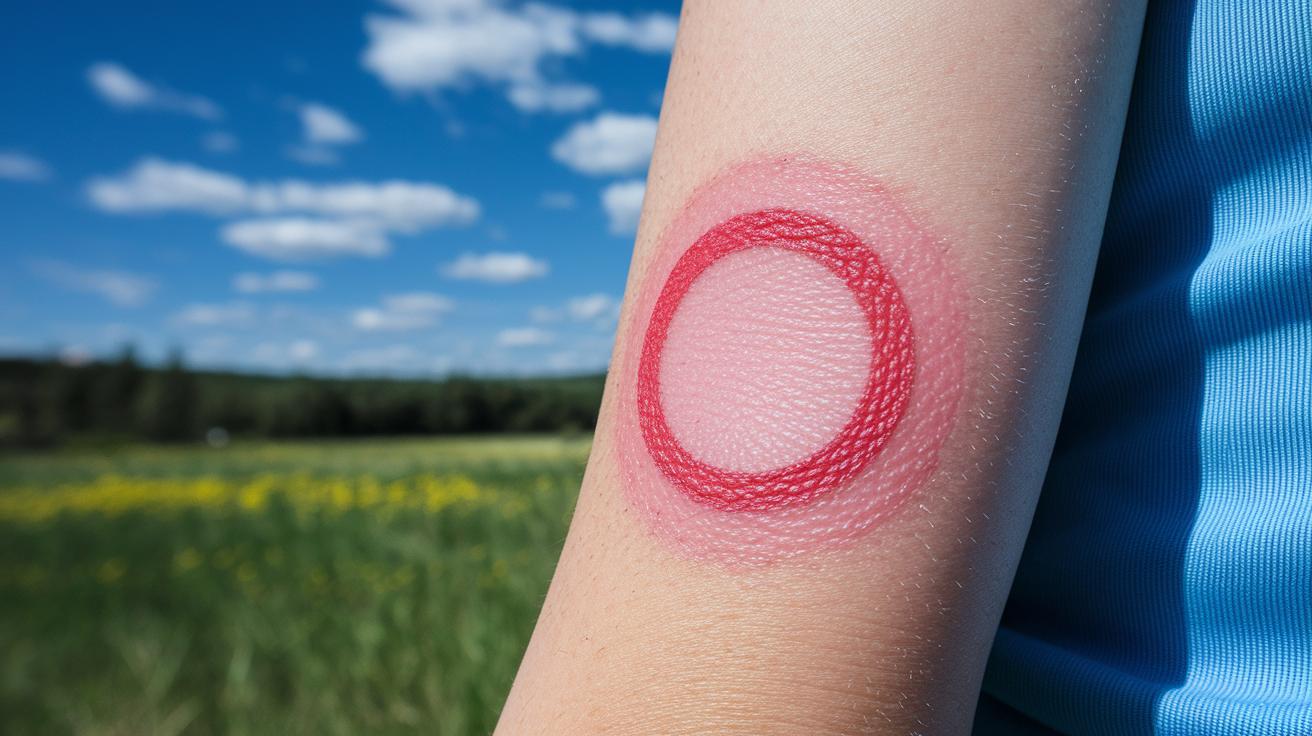
There are several reasons you might see a red, itchy ring on your skin. Sometimes, an infection is the culprit. Ringworm (a common skin fungus), Lyme disease (a bacterial infection from a tick bite that can cause a target-like rash), or swimmer's itch (tiny parasites from water) can all lead to that circular redness. Think of it like seeing a red ring after spending time outdoors.
Sometimes your skin reacts to something you touched. Things like soaps, laundry detergents, nickel jewelry, or even hair dyes can trigger a rash. Imagine switching to a new hair product and then noticing a fresh red patch, that’s a typical case of contact irritation.
Other times, the problem comes from your body’s own immune system or inflammation. Conditions such as atopic dermatitis (persistent, itchy skin) or lupus (which can cause a butterfly-shaped rash that may extend in rings) might be at play. Even small, bright red spots from cherry angiomas or scaly patches from psoriasis that partially form rings add to the overall picture.
Some details, like the lupus-related blood vessel changes, have already been mentioned earlier to keep everything clear and avoid repeating the same information.
Dermatologic Lesion Evaluation for Circular Red Itchy Rash
When you first see a circular, red, and itchy rash, a simple physical check is the best place to start. The doctor will carefully look at the edge of the rash, how rough or scaly it is, and if the center looks clearer than the border. Think of it like a ring where the outer part feels different from the middle. This clear outline can mean more tests might be needed.
They might take a small skin scraping and use a KOH prep along with a fungal culture. Picture it like checking a tiny sample under a microscope to catch any sneaky fungus. If the doctor thinks the rash could be due to conditions like granuloma annulare, lupus, or psoriasis, they might also take a little piece of skin for a biopsy (a tiny bit of skin used to get a closer look). This helps to understand what the cells are doing.
Sometimes, blood tests such as ANA or ESR are done next to see if there is any sign of inflammation coming from the immune system. These tests give clues about other issues that might be causing the rash. On top of that, a test called dermoscopy helps the doctor look closely at the tiny blood vessels and scales in the rash.
If the rash doesn’t go away after 2 to 4 weeks or if the cause isn’t obvious, it’s a good idea to visit a dermatologist.
Effective Ringed Rash Treatment Options

When you notice a red, circular rash that's leaving you itching, there are several ways to help ease the discomfort. If ringworm (a common skin fungus) is causing the rash, you might try an antifungal cream, something like an azole or allylamine, applied for two to four weeks. Think of it like slowly erasing a stubborn stain until your skin looks normal again.
If your rash is due to conditions like dermatitis (skin irritation) or pityriasis rosea (a type of rash often seen in younger people), a mild steroid cream can be a real lifesaver. It works like a cool, soothing breath on your skin after a hot day, calming both the itch and the irritation.
Sometimes, the redness and swelling may come from a bacterial problem, such as early Lyme disease. In these cases, doctors often suggest antibiotics like doxycycline or amoxicillin to attack the infection right at its source. Picture those antibiotics as little soldiers fighting away hidden invaders in your body.
When severe itching joins the mix, as it can with hives or contact dermatitis, an oral antihistamine, say cetirizine or loratadine, can help a lot. It's a bit like stepping out of a noisy room so you can finally have a moment of peace.
There are also extra steps you can take. Using a moisturizing cream or barrier cream helps lock in moisture and ease the itch. Cool compresses can soothe the skin, too. And if the rash comes from swimmer's itch (irritation from contaminated water) or too much heat, try to avoid harsh chemicals or other irritants.
- Topical antifungal creams for ringworm
- Mild steroid creams for inflammatory rashes
- Antibiotics for bacterial infections
- Oral antihistamines to reduce itchiness
Preventing Recurrence of Circular Red Itchy Rash Outbreaks
Keeping your skin clean and dry really helps stop those annoying red, itchy rings from coming back. After a fungal episode, wash your clothes, sheets, and towels often. Think of it like rinsing off your workout gear right after a sweaty session.
Try out any new creams or cosmetics on a small patch of your skin first, say, your inner wrist. If you don't see any redness after a day, it should be safe to use all over.
When you're outdoors, protect yourself from tick bites. Wear long sleeves, try permethrin-treated clothing (a special fabric treatment that repels ticks), and use a DEET repellent. These little steps work wonders, especially if you’re in tick-prone areas like wooded parks.
Every day, apply a broad SPF to help reduce flare-ups, especially if you have conditions like lupus. Regular moisturizing also boosts your skin’s barrier, which might help cut down on that urge to scratch.
- Keep your skin clean and dry
- Patch-test new products first
- Wear protective outdoor clothing and use repellents
- Use broad-spectrum SPF and moisturizers daily
When to Seek Specialist Advice on Pruritic Ring-Like Skin Inflammation

If you start noticing a red, itchy ring that just won't go away, it might be time to talk to your doctor. Imagine you have a rash that not only itches but also comes with a fever or makes it hard to breathe. Those are clear signs to get help fast.
- If you experience a lot of swelling or have trouble breathing along with the rash, see a doctor right away.
- If the rash sticks around for more than 2 to 4 weeks even after using over-the-counter remedies, it’s smart to schedule an appointment with a dermatologist.
- If the rash reappears in the same spot or spreads quickly, that may mean you need a specialist to take a closer look.
- Keep an eye out for changes like uneven borders, quick growth, or any open sores. Just picture a ring that suddenly looks different from how it used to, it's worth a call to your doctor.
Taking care of these signs early on can help determine if you need a biopsy (a small tissue check) or more tests to find out what’s really going on with your skin.
Final Words
In the action, we walked through key causes behind a circular red itchy rash, highlighting its signs, from ringworm’s scaly borders to allergic triggers. We also talked about the best steps to check these rashes, matching tests with treatment and simple steps to keep them at bay.
Our chat helped bridge the gap between everyday observation and expert insights. Keep a close eye on any changes and feel hopeful, small steps today may lead to improved wellness tomorrow.
FAQ
Q: What does a red circle on your skin that is not itchy indicate?
A: The red circle on your skin that is not itchy may indicate conditions like lupus or pityriasis rosea. It can also stem from mild dermatitis. If the rash persists, seek evaluation from a doctor.
Q: What does stage 1 ringworm look like?
A: The stage 1 ringworm rash typically starts as a small red, itchy bump that expands into a ring with a raised, scaly border and a lighter center. Early treatment helps prevent spread.
Q: How does a Lyme disease rash differ from other circular skin marks?
A: The Lyme disease rash usually appears as a bull’s-eye pattern with a red ring around a lighter area, emerging one to four weeks after a tick bite. This pattern is distinct and needs prompt attention.
Q: What might a red circular bump that itches suggest?
A: The red circular bump that itches may suggest a fungal infection like ringworm or an allergic reaction. Monitoring its changes and seeking advice if it worsens is a smart approach.
Q: How can one treat a red circle on the skin that is not itchy?
A: The treatment for a non-itchy red circle depends on its cause. It may involve gentle cleansing, topical remedies for fungal or inflammatory issues, or consulting a dermatologist if the mark lasts several weeks.


